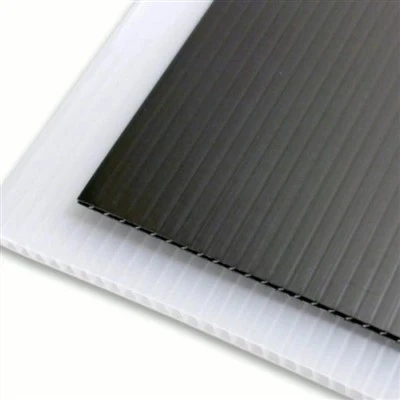
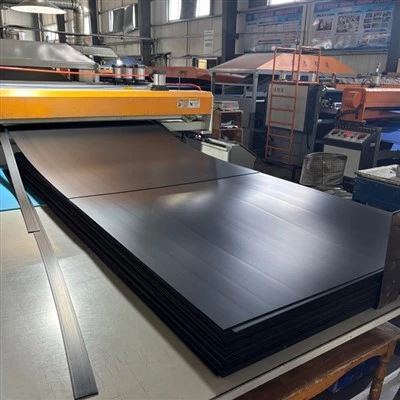
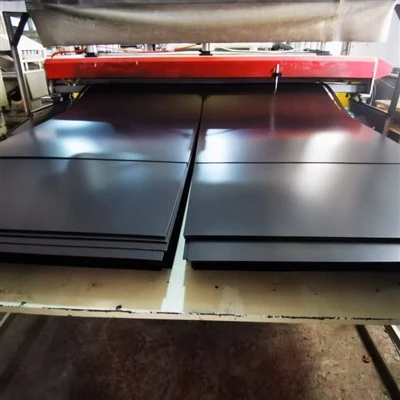
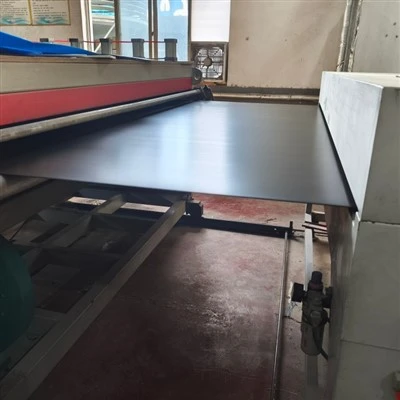
Hollow board-often referring specifically to PP (polypropylene) hollow board-is also known as "Wantong board" (a common trade name in China). It is produced by extruding a mixture of polypropylene and polyethylene raw materials. Because its cross-section features a grid-like structure, it is also referred to as "grid hollow board." Globally, it is often called "twin-wall board," while in China, it goes by various names-such as plastic hollow board, Wantong board, PP hollow board, or even "honeycomb board"-depending on the region or local conventions.
PP hollow boards come in a wide range of colors, and their thickness is adjustable. For instance, some brands offer thicknesses ranging from 2 mm to 10 mm, while certain overseas manufacturers produce boards up to 12 mm thick. The material properties of PP hollow board make it non-toxic, pollution-free, corrosion-resistant, waterproof, and shock-absorbent. Manufacturers can incorporate flame-retardant masterbatches to create flame-retardant boards for applications requiring high fire safety, such as Christmas decorations or outdoor billboards in dry, windy areas. Anti-aging and UV-resistant PP hollow boards-made by adding UV-resistant masterbatches-are suitable for greenhouse roofing. In my country, these boards are primarily used for industrial product turnover containers; varieties include standard PP hollow board, anti-static PP hollow board (surface resistivity: 10⁹–10¹¹ Ω), static-dissipative PP hollow board (surface resistivity: 10⁶–10⁹ Ω), and conductive hollow board (surface resistivity: 10³–10⁶ Ω). As a novel eco-friendly material, hollow board generates no dust during use, offers a long service life, and is recyclable. Furthermore, its light weight, flexible sizing, high toughness, and relatively low cost allow it to increasingly replace corrugated paperboard.
Advantages of Plastic Hollow Board
1. Excellent mechanical properties: The unique structure of plastic hollow board provides good toughness, impact resistance, high compressive strength, cushioning capabilities, high rigidity, and excellent bending performance. 2. Lightweight and material-efficient: Plastic hollow boards offer excellent mechanical properties; they require less material and are lighter and more cost-effective than solid boards while delivering comparable performance.
3. Insulation: Featuring a hollow plastic structure, these boards provide superior sound insulation compared to solid boards, as well as effective thermal insulation.
4. Diverse varieties: Options include anti-static, conductive, flame-retardant, modified/blended, and surface-coated varieties, allowing the boards to possess specific properties such as anti-static capabilities, conductivity, and flame retardancy.
5. Stable chemical properties: Plastic hollow boards are waterproof, moisture-proof, and resistant to corrosion and insect damage; they are also fumigation-free, offering significant advantages over cardboard and wood.
6. Smooth, attractive surface: By adding masterbatch, the boards can be produced in a wide range of colors; the surface is smooth and suitable for printing.
7. Significant environmental benefits: Plastic hollow boards are non-toxic and pollution-free; waste disposal is simple and does not harm the environment, and the material can be recycled to manufacture other plastic products.